
College students are constantly being asked to look at one more flyer, open one more email, or follow one more account. As a third-year communications major and active campus leader, I’ve spent the past few years learning what it takes to communicate with college students, not just in the classroom, but through my work creating social media content, promoting campus events, and helping student organizations get information in front of their peers.
That’s why I was so impressed when I learned about San Jacinto College’s marketing and outreach strategy for the AIMS (Assess and Improve Mental Health Services) project during their participation in the Trellis Foundation Mental Health and Wellbeing Learning Community. The mental health programs staff at San Jac knew they had to be creative to get students’ attention and earn their trust.
During the 2024-2025 academic year, San Jac served more than 31,000 students across multiple campuses in Houston and eastern Harris County; a significant portion of that enrollment is online, hybrid, or dual credit. Staff can’t hang one poster in the student union and call it a day. San Jac’s counseling team seemed to understand that from the jump. Instead of leaning on a single channel, they built a strategy that shows up everywhere a student might be on campus, in their inbox, on their phone, and embedded in the portal they already log into for grades and financial aid.
As someone involved in organizing campus events, something I loved was how fun the on-campus outreach events were:
- Goat yoga, utilizing animal therapy to provide comfort for individuals experiencing stress
- “Let’s Talk,” a pop-up counseling option where students could grab coffee with a counselor with zero appointment and zero pressure
- A suicide awareness event built around making calm-down jars instead of sitting through a lecture
None of these sound like typical mental health awareness events. Instead of creating a space where students might feel intimidated about seeking help, these events were something you’d actually want to walk up to and join. The casual nature of these events allowed students to have real conversations, and those conversations made them more willing to book that first formal appointment.
On the digital side, San Jac’s communications really shine:
- Campus TV panel, consistently bringing mental health content into spaces the students already pass through
- Targeted e-mail campaigns promoted peer-led support groups instead of generic resources
- Self-referral campaigns, with a messaging system aimed straight at students instead of at faculty or staff, running on social media and e-mail so students can raise their hand privately on their own time, without a professor or advisor needing to notice first.
- A dedicated mental health and counseling page, which was built into the student portal, embedding information in a digital space students visit regularly instead of requiring students to discover it on their own
The counseling staff at San Jac also partnered with other staff and faculty who see students every day and trained them to refer students to counseling services. This built a network of trusted messengers, which research shows is key to reaching students who are already stretched thin. By blending all these strategies, the college repeatedly puts information about mental health resources in the path of struggling students.
If I had to distill San Jacinto College’s approach down into one lesson for other institutions: awareness isn’t a one-time announcement; it’s an ecosystem.
They didn’t close the gap between the need for support and access with more funding and staff alone; they closed it with communication built on trust, repetition, and meeting students exactly where they are.
So, whether I’m promoting a campus event, communicating an opportunity to students, or eventually working in public relations, I want to carry forward that same mindset. My goal is not just to create communication that looks good; it’s to create communication that connects, informs, and moves people to action. San Jac’s AIMS project reminds me that sometimes the most important part of delivering a message isn’t saying it louder; it’s making sure you’re saying it where people are ready to listen.
About the Author
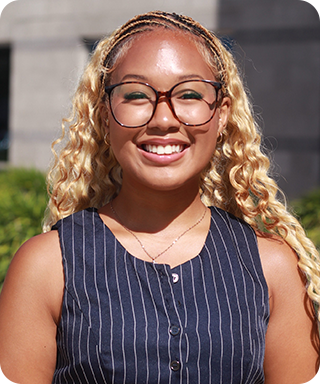
Rubyjoy Pepito—Ruby—is a junior Communication major at Huston-Tillotson University in Austin, TX, with experience spanning institutional communications, community engagement, and campus leadership. She previously served as an Institutional Advancement Communication Intern at Huston-Tillotson University, where she drafted content for the university’s website, communications, and press releases, and supported event planning for alumni reunions, Homecoming, and community outreach. Ruby is pursuing a Bachelor of Arts in Communication from Huston-Tillotson University, graduating in Fall 2027. She currently serves as Huston-Tillotson University’s 2026–2027 Miss Junior. Outside of school, Ruby enjoys reading, walking, visiting museums, and trying new places around Austin, and loves finding beauty in everyday moments. Her career interests center on entertainment public relations, representing POC and Black artists, creatives, and brands.